
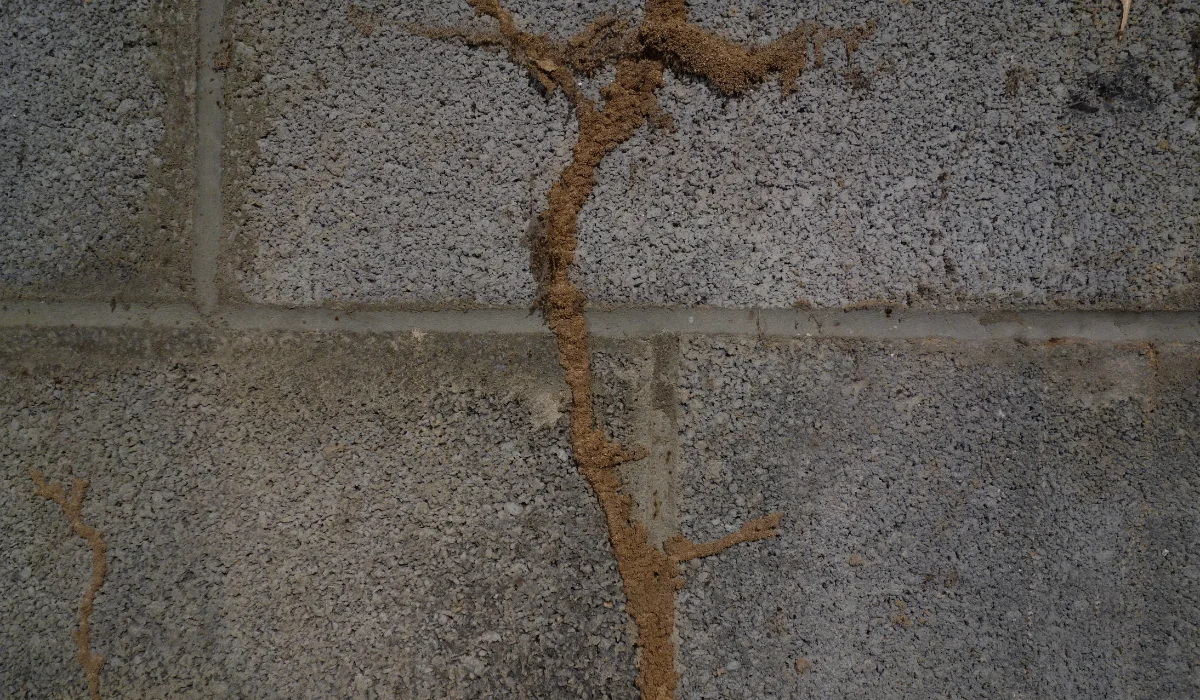
Seeing termite mud tubes on your home can be scary. Many homeowners in Los Angeles County find these small dirt lines on walls, wood, or concrete near the ground. These tubes are often a sign that termites are nearby.
In many cases, subterranean termites make these tubes to travel from the soil to wood. They need the tubes to stay safe and keep from drying out. That means termite mud tubes can point to hidden termite activity inside or under the home.
If you spot tubes, do not ignore them. A quick termite inspection can help identify the problem early and reduce the risk of termite damage and costly repairs.
Key Takeaways
- Termite mud tubes often mean that subterranean termites are active
- Tubes may show up on foundation walls, wood, or in crawlspaces
- These tubes help termites reach a food source inside the home
- A professional inspection can find hidden damage
- Fast termite control can help prevent bigger repairs
What Termite Mud Tubes Mean
These tubes help termites move from place to place.
Shelter Tubes
Many termite mud tubes serve as shelter. These tubes protect termites as they move from the soil to wood.
They are often found on foundation walls or near the home’s foundation. They help termites reach food sources, such as wood in walls or floors.
Exploratory Tubes
Some tubes are called exploratory tubes. These are made when termites search for new wood.
These tubes may show that a termite colony is testing new areas. If not treated, this can turn into a termite infestation.
Drop Tubes
You may also see drop tubes hanging down from wood. These can form under beams or joists.
Drop tubes may point to an active termite problem higher in the structure. They are a warning sign that should not be ignored.
Where to Check for More Signs
After you find tubes, check other areas too.
Foundation Walls and Crawlspaces
Start near foundation walls and crawlspaces. These spots are dark and often damp, which termites like.
Look for more termite mud tubes, dirt lines, or soft wood. Check around subfloors and joists if you can do so safely.
Baseboards and Window Frames
Inside the home, check baseboards and window frames. Termites may damage these areas as they move through the house.
Watch for cracks, soft spots, or paint that looks bubbled. These can be signs of termite trouble.
Porches and Wood Near Soil
Check porches, steps, and other wooden structures that touch the ground. These places can become an easy food source.
Also look at sills and other low wood areas. If you find damaged wood, termites may already be feeding there.
Mud Tubes vs Other Foundation Marks
Some marks look like tubes, but they are not.
Dirt Stains
Rain can leave dirt marks on concrete. These may look messy, but they are not true termite tunnels.
Real termite mud tubes usually connect the soil to wood. They often stay in one clear line.
Utility Marks
Old lines near pipes or wires can look like tubes. Some people call these utility tubes, but they are not made by termites.
If the mark does not connect to wood or soil, it may not be termite-related.
Ant Trails
Ants can leave marks, too, but ants do not build mud tubes. Their trails look different and do not form packed dirt tunnels.
If you are not sure what termite mud tubes look like, a professional inspection is the safest next step.
What to Do Next
Now is the time to act.
Do Not Use DIY Fixes
A DIY fix like scraping off tubes may make the area look better, but it will not solve the real problem.
If there is an active infestation, termites may still be inside the wood. They can simply rebuild the tubes.
Book a Professional Inspection
A professional inspection can show how far the problem has spread. Pest control professionals know where to look for hidden signs.
They can check entry points, wood damage, and areas under the home. This is the best way to confirm a termite problem.
Ask About a Treatment Plan
If termites are found, a pest control company can build a treatment plan. The right termite treatment depends on where the termites are and the extent of the damage.
This is also a good time to ask about termite prevention and regular inspections for year-round protection.
Schedule a Termite Inspection in Los Angeles County
Finding termite mud tubes is often an early warning that termites are close by. Waiting too long can lead to more termite damage and even structural damage in parts of the home.
Pest-R-Us offers termite inspection, termite control, and general pest control services in Los Angeles County. If you see tubes on your walls, porch, or foundation, now is a smart time to schedule a visit.
A trained team can inspect the home, explain the next steps, and help protect your property from a growing termite infestation. Ask about a free quote and available service options.
FAQs
Do termite mud tubes always mean termites are active?
Not always, but they often point to recent or current termite activity. A professional inspection can tell if the termites are still there.
Where are termite mud tubes usually found?
They are often found on foundation walls, in crawlspaces, near baseboards, and around wood in contact with soil.
Should homeowners remove mud tubes themselves?
It is better not to. Removing tubes without help can temporarily hide the problem, but it does not stop a termite infestation.