
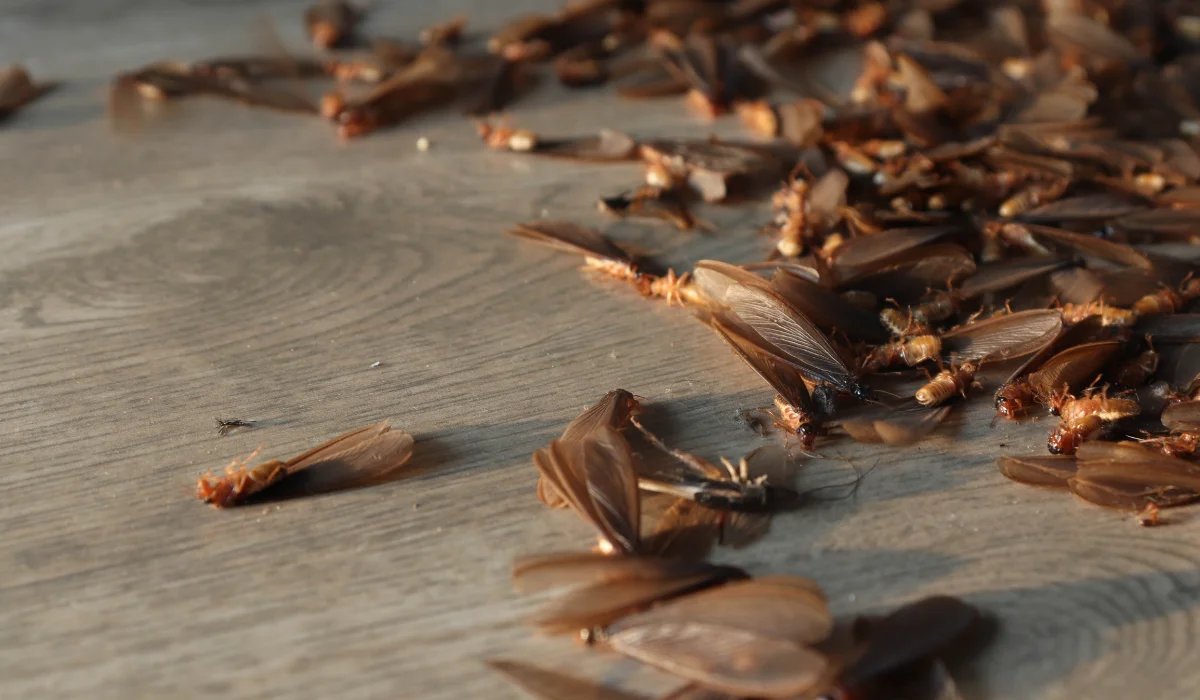
If you see flying insects near your windows in spring or summer, they could be termite swarmers. In Walnut Creek, the termite swarming season is when termites leave a mature colony to start new colonies. For many homeowners, this is the first sign of a termite problem.
Swarmers do not cause damage on their own. But they often indicate the presence of nearby colonies. Subterranean termites and drywood termites are both common in this area. Each type of termite swarms at different times of the year.
Knowing when termite swarming season happens and what to look for can help you spot termite activity early and avoid costly termite damage.
Key Takeaways
- Termite swarming season in Walnut Creek often begins in late spring and can continue into early or late summer.
- Termite swarmers are winged termites that signal nearby colonies.
- Mud tubes, hollow wood, and indoor swarms are signs of termite infestation.
- Professional termite inspections and termite treatment help stop termite damage early.
When Termite Swarm Season Hits Walnut Creek
Termite swarming season depends on weather conditions and the type of termite.
Late Spring Warm Weather
In Walnut Creek, subterranean termites swarm in late spring. Warm days after rain often trigger swarming activity.
This usually happens during the daytime. Homeowners may see large numbers of termite swarmers near windowsills or outdoor lights.
Early Summer Heat
Early summer can also bring swarms. When temperatures rise, subterranean termites swarm as part of their life cycle.
If you see winged termites during early summer, it may mean there is a mature colony close to your home.
Late Summer Swarms
Drywood termites often swarm in late summer. These swarms can happen inside the home if the colony is already in the wood.
Unlike subterranean termites, drywood termites do not need soil. Indoor swarms may signal the presence of termites within walls or attic spaces.
What Swarmers Look Like (And Common Lookalikes)
Many homeowners mistake termite swarmers for flying ants. It is important to know the difference.
Winged Termites
Termite swarmers have straight antennae and two pairs of wings that are the same size. Their bodies are thick and straight.
After swarming, they often drop their wings. You may find small piles of wings on windowsills.
Flying Ants
Flying ants have bent antennae and wings of unequal size. Their bodies have a narrow waist.
If you are unsure, professional termite inspections can confirm the type of insect.
Piles of Shed Wings
Sometimes you will not see the insects. Instead, you may see shed wings near doors or windows.
These wings are a strong sign of termite swarming season and possible termite activity inside.
Signs a Swarm Means an Active Colony
Seeing swarmers outside does not always indicate damage. But certain signs point to an active infestation.
Mud Tubes
Subterranean termites build mud tubes along foundations and in crawl spaces. These tubes protect them as they travel.
Mud tubes are one of the most common signs of termites.
Soft or Hollow Wood
Termites feed on cellulose found in wood. Over time, this causes termite damage.
If wood sounds hollow when tapped or feels soft, there may be a termite colony inside.
Swarms Inside the Home
If you see large numbers of termite swarmers indoors, this may signal a termite infestation.
Indoor swarming activity often indicates the presence of existing colonies within the structure.
What to Do If You See Swarmers
Acting quickly during the termite swarming season can limit damage.
Do Not Spray Random Products
Spraying swarmers will not stop the termite colony. The main colony remains hidden behind walls or underground.
Proper termite control requires finding and treating the source.
Collect a Sample
If possible, place a few swarmers in a small container. This helps with proper identification.
Check Around the Foundation
Look around your crawl space and foundation for mud tubes or other signs of termite presence.
Avoid breaking open walls or disturbing suspected areas.
Schedule a Professional Inspection
The best step is to schedule termite inspections with a licensed pest control provider. Regular inspections help detect termite problems early.
Pest-R-Us provides termite control and treatment for Walnut Creek homeowners dealing with termite activity.
Book a Termite Inspection in Walnut Creek
Termite swarming season is a warning sign. Even if you see swarmers only once, there may be a termite colony nearby.
Pest-R-Us offers professional pest control, termite inspections, and termite treatment for both subterranean termites and drywood termites. Early action can prevent serious termite damage.
If you notice swarming activity, shed wings, or other signs of termites, schedule a termite inspection in Walnut Creek and protect your home year-round.
FAQs
How long does the termite swarming season last?
Termite swarming season usually lasts several weeks in late spring or early summer. Some drywood termites may swarm in late summer.
Do swarmers mean I have termite damage?
Not always. Swarmers can come from outside. However, indoor swarms often indicate an active infestation.
Should I worry about one swarm?
Yes. Even a single swarm may indicate a mature colony nearby. A professional inspection can confirm the presence of termites.